It should be the same with security systems — they should always include sound so that security teams have full situational awareness to make the correct decisions in response to an incident. But that’s often not the case.
Thank you for reading this post, don't forget to subscribe!
But with audio and communications, there is a question of whether it will be integrated into a security solution. Why are security executives not fully implementing the many benefits of integrated audio? Hearing and speaking security systems is the need of the hour.
Audio’s everyday use
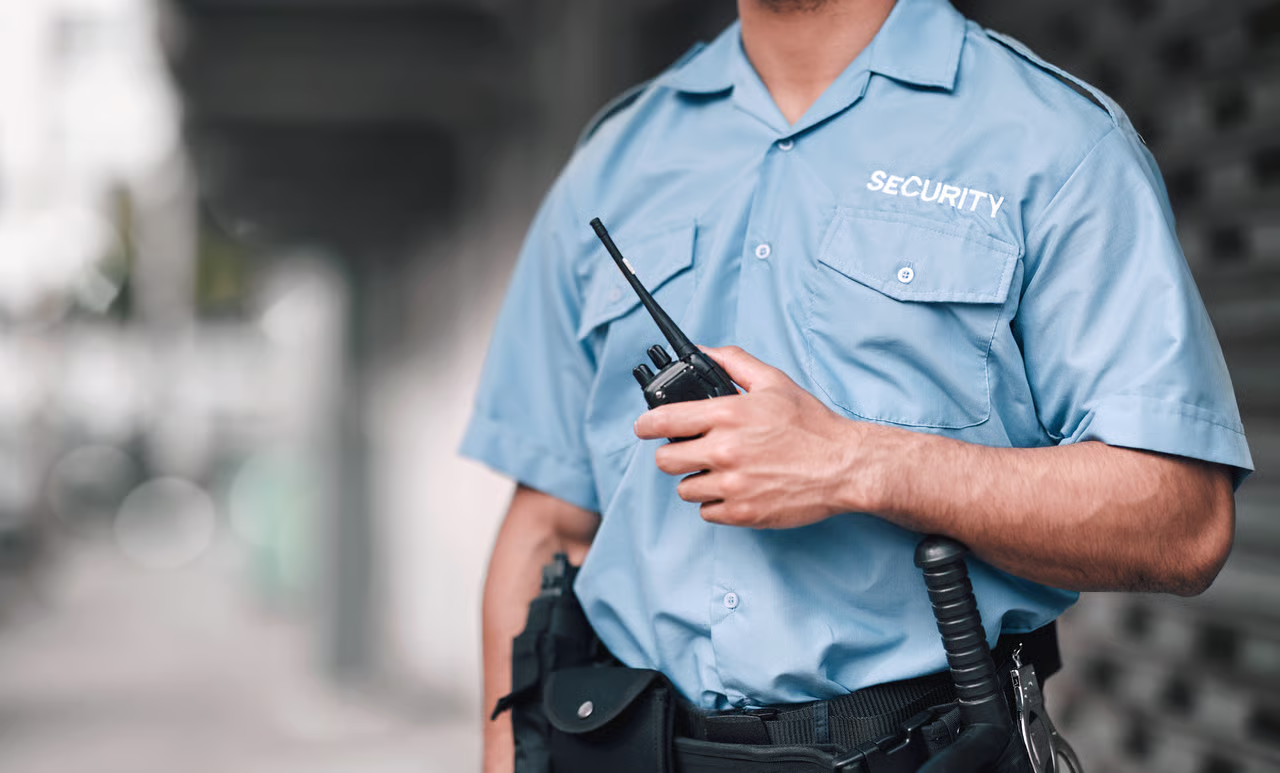
Audio is not new to the security industry. Loudspeakers, intercoms, two-way radios, and emergency help stations have been deployed for years in hospitals, schools, airports, commercial buildings, prisons, and more. It’s also been offered as a standard feature in video cameras. Yet, unless someone is standing directly next to the video camera’s microphone, the communication is not clear.
In addition, smart audio devices such as Amazon’s Alexa and Apple’s Siri, two of the most common voice assistants, are often used in many homes. A report by Juniper Research estimates that sales of smart audio devices will top $10 billion in 2022.
The justice system has embraced sound, as well. According to SIA’s recent Safe and Sound: A Primer on Audio and Intelligent Communications report, “A recent event in California demonstrates this broad acceptance. A shooting in a grocery store parking lot was captured on security video while a nearby doorbell camera picked up the audio of the gunshot. Law enforcement was able to synchronize the sound occurrence with the video through time stamps on both audio and video recordings, and a judge admitted that footage synchronization into evidence.”
Privacy concerns
Privacy concerns when using audio surveillance and audio recording in security applications likely have restrained the adoption of the technology. And those concerns are valid.
However, court cases, such as Katz v. United States in 1967, have shown that it is legal to record conversations where the parties are openly communicating, with no expectation of privacy, or at least when one of the parties agrees to the recording.
Still, it’s always important to be transparent, with signage in place that lets people know that the area they are in, or entering, is under audio surveillance. In addition, it should be communicated to users, guests, employees, and others about how the technology is being used. Of course, when doubts arise about specific use cases, it is always best to retain legal assistance.
Always include audio
Audio should be included in every security solution that security leaders employ, in conjunction with video surveillance and access control. The integration of video, access control, and audio offers actionable insight into risks and potential physical dangers that a silent security system does not.
Video surveillance and access control are necessary tools to secure facilities, yet they cannot completely do the job. Video surveillance may show a scene, yet someone is not likely to run to a video camera when they need assistance. Instead, they are more likely to speak. Will your security team hear them?
Access control can only do so much, as well. It only works for known credentials and everyday, normal situations.
Imagine there’s an emergency in a facility that would prompt an evacuation. Employees may know the standard evacuation procedure, but how do others know what to do and where to go? And what if it is unsafe to evacuate? Clear audio is critical to communicate how to respond, including whether to leave the building and where to go.
Post-event, audio helps to correctly recreate the incident and the response. An individual’s recollection of an event can often be unreliable. Audio can hear what happened and add clarity to a post-event investigation.
It’s time to understand the value of audio and intelligent communications and use it to enhance safety, security, and the bottom line for stakeholders and facilities. It’s time to always include audio.